

Navigating the world of health insurance can feel overwhelming. It’s a maze of confusing terms, hidden costs, and endless plan options. That’s where a health insurance broker comes in—they act as your personal guide, helping you find the right coverage without the headache.
What Is A Health Insurance Broker?

Think of it this way: if you were building a house, you'd hire a general contractor to manage all the moving parts. A health insurance broker does the same for your healthcare coverage. They are licensed professionals who specialize in translating the complexities of Health Insurance into plain English, so you can make a confident and informed decision.
Instead of you having to research deductibles, copays, and provider networks on your own, a broker does the legwork for you. Their job is to understand your specific situation and match you with a plan that actually fits your life.
The Broker vs. The Captive Agent
It’s really important to know who you’re talking to. You’ll run into two types of professionals: brokers and captive agents.
A captive agent works for one single insurance company. They’re like a salesperson at a Ford dealership—they know their products inside and out, but they can only sell you a Ford.
An independent broker, on the other hand, works for you. We aren't tied to any single carrier. Instead, we partner with a wide range of insurance companies to shop the entire market on your behalf. This gives you a full picture of what’s available from carriers like Aetna, Cigna, and Blue Cross Blue Shield, ensuring the focus stays on your needs, not a sales quota.
A broker's primary role is to be your advocate. We assess your unique health needs, budget, and doctor preferences to find a plan that is the right fit, rather than pushing a one-size-fits-all product.
This personalized, client-first approach is why the demand for brokers is climbing. The insurance brokers and agents market is forecasted to surge from $232,364 million in 2025 at a 6% compound annual growth rate. In a market where North America is projected to hold a 62.1% share by 2026, the value of expert, personal advice is clearer than ever.
Your Personal Healthcare Shopper
The "personal shopper" analogy really is the best way to think about it. You wouldn't want a stylist who only shops at one store, right? The same logic applies here. A good broker will:
- Listen to your needs: First, we get to know you. We’ll talk about your family's health history, any prescriptions you take, and, crucially, which doctors and hospitals you want to keep in your network.
- Analyze your budget: We help you find that sweet spot between a monthly premium that doesn’t break the bank and out-of-pocket costs (like deductibles) that you can actually manage if you need to use your insurance.
- Compare the options: This is where we do the heavy lifting. We’ll sift through dozens of plans, laying them out side-by-side in an easy-to-understand way.
- Provide unbiased advice: Because we don't work for the insurance companies, our recommendations are based on one thing and one thing only: what’s best for you.
Working with a health insurance broker means you have a knowledgeable professional in your corner. We simplify the process, open up your options, and serve as your trusted partner for one of the most important financial decisions you'll make.
The Real Benefits Of Using A Broker
So, what’s the real-world value of working with a broker? Sure, they help you find a plan, but it goes much deeper than that. Partnering with an expert for your health insurance broker services is less about convenience and more about gaining a powerful ally who can save you money, time, and a whole lot of headaches. It turns the overwhelming task of buying health insurance into a clear, confident decision.
Think about this: you wouldn't try to navigate the entire stock market on your own, right? The health insurance market is just as vast and complex—it's projected to hit USD 5.5 trillion globally by 2034. Trying to find your perfect spot in that massive industry is a tall order. Instead of you having to bounce between five different insurance websites trying to compare apples to oranges, a broker brings all the best options directly to you, laid out in a way that actually makes sense. You can read more on these market trends from industry experts at Fortune Business Insights.
Personalized Expert Guidance
A good broker doesn't just show you a list of plans; they act as your personal translator. We’ve all seen those policy documents filled with confusing terms like deductibles, coinsurance, and out-of-pocket maximums. A broker’s job is to cut through the jargon and explain exactly what those terms mean for your family and your budget.
For example, that plan with the super low monthly premium might catch your eye, but its high deductible could be a financial disaster if you have active kids who are regulars at urgent care. Your broker will actually run the numbers with you, showing you what your total out-of-pocket costs could look like in different scenarios. It’s about preventing you from making a decision based on the monthly payment alone.
An experienced broker acts as your personal healthcare strategist. They help you look beyond the monthly premium to understand the true value of a plan, ensuring your coverage works for you when you actually need to use it.
This personalized approach is everything. They'll take the time to ask about your family's doctors, specialists, and preferred hospitals to make sure they're included in any plan you're considering. This one step can save you from the frustrating and expensive surprise of finding out your trusted physician is suddenly out-of-network.
Significant Cost-Saving Opportunities
This is where working with a broker really pays off. Their expertise isn't just about finding a plan—it's about finding you the absolute best value. They are masters at spotting plans with the right mix of strong benefits and affordable costs that most people would completely miss on their own.
They are also experts in navigating the world of financial assistance. This includes:
- ACA Subsidies: A broker can immediately tell you if your income qualifies you for premium tax credits through the Affordable Care Act (ACA). These subsidies can slash your monthly premium.
- Cost-Sharing Reductions: They’ll also check if you’re eligible for extra savings that lower what you pay for deductibles, copays, and coinsurance when you get care.
- Competitive Bidding: Because brokers work with multiple insurance companies, they foster a competitive environment that often results in better prices and richer benefits. For some clients, this leads to premium savings of 20-30%.
Want to see how different plans and potential savings stack up? You can get a head start right now with our health insurance plan comparison tool.
A Year-Round Advocate And Partner
Here’s one of the most underrated perks: a broker’s job doesn’t stop once your policy is active. They become your go-to advocate for the entire year, a key benefit of using health insurance broker services.
When you get a confusing bill or a claim is denied, your first call should be to your broker, not a faceless 1-800 number. They can talk directly to the insurance company on your behalf, cutting through red tape and saving you from hours of hold music and frustration.
And since your life and the insurance landscape can change from year to year, your broker will proactively reach out during the annual open enrollment period. They'll review your current plan, discuss any life events, and help you decide if it’s still the right fit or if a better option has become available. It’s a long-term partnership that ensures your health coverage always keeps up with your life.
What Kind of Health Insurance Can a Broker Help You Find?
A seasoned health insurance broker knows that there’s no such thing as a "one-size-fits-all" plan. The right coverage for a freelancer is completely different from what a small business owner needs, and a good broker can find the perfect fit for just about any situation. Think of them as your personal guide to the complex world of health plans, making sure you end up with coverage that actually works for your life and your budget.
Instead of you spending countless hours trying to decipher and compare policies from dozens of different carriers, a broker does all that legwork for you. They sift through the noise and bring you a handful of the best options that make sense for your specific needs.
Individual and Family Plans
If you're self-employed, in between jobs, or your company doesn't offer health benefits, you'll likely need an individual or family plan. These policies are designed for people who have to buy coverage on their own, and this is where having a broker in your corner is a game-changer. They can introduce you to a whole range of plans you might never have found otherwise.
A broker will take the time to really understand your situation—your family’s health history, your monthly budget, and, crucially, which doctors you want to keep. They use that information to match you with plans that check all the boxes. This helps you avoid that all-too-common frustration of finding a great-looking plan, only to realize your favorite doctor isn't in the network. If you need to find coverage for yourself, you can explore some of the different individual health insurance options available.
This visual gives a great breakdown of the core benefits a broker provides: better choices, real savings, and ongoing support.
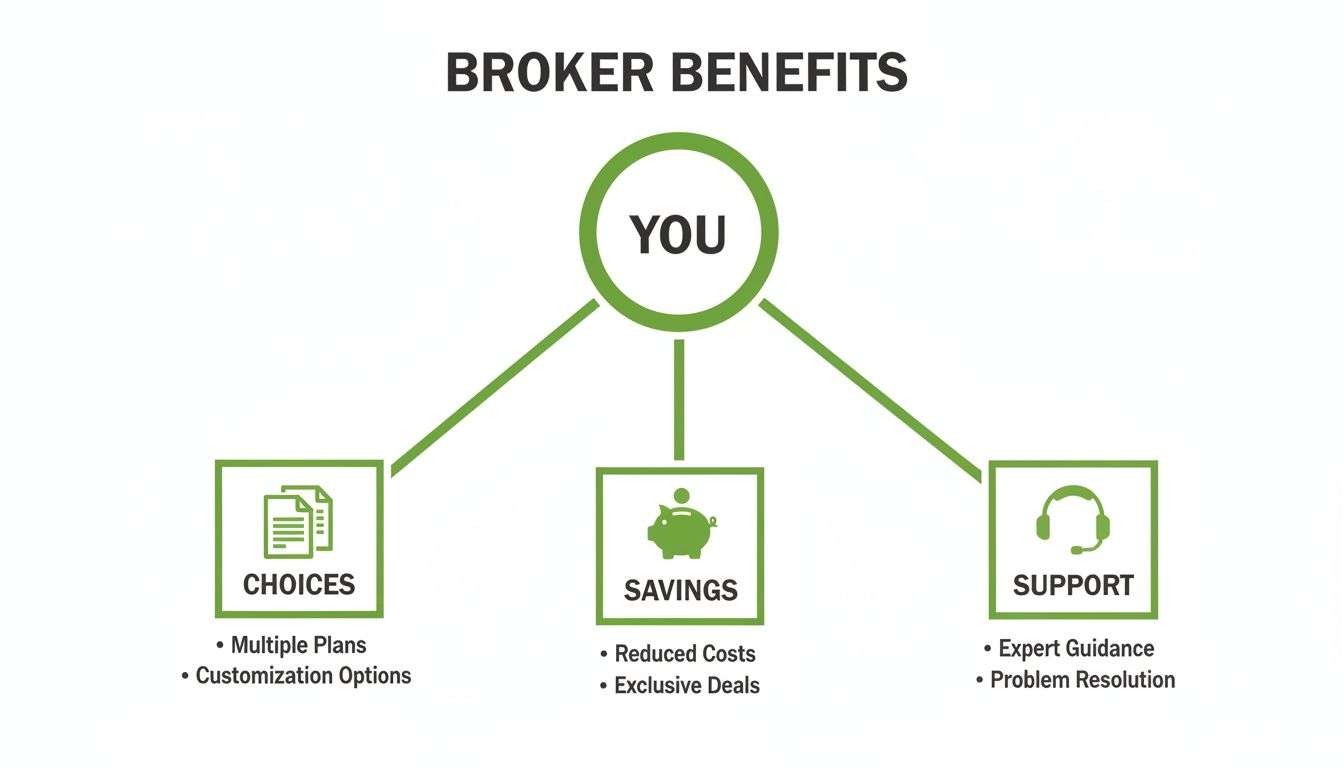
As you can see, a broker’s value comes from turning a confusing and often stressful decision into a clear, supported process that puts your needs first.
Small Group Health Plans
For small business owners, offering a solid health insurance plan is one of the best ways to attract and keep great employees. But let's be honest—managing the process can be a huge time-sink. A broker takes that entire burden off your plate, helping you build a benefits package that works for your company’s bottom line and keeps your team happy.
They handle all the critical behind-the-scenes work, including:
- Negotiating with carriers to lock in competitive group rates.
- Ensuring your plan meets all legal and regulatory requirements.
- Presenting a clear, side-by-side comparison of plans from different insurance companies.
- Helping with employee enrollment and answering all their questions along the way.
Here’s a real-world example: a small nonprofit with fewer than 5 employees was struggling to get coverage. After being turned down by several large providers, they connected with a broker. The broker used their industry relationships to find them an excellent Blue Cross Blue Shield PPO plan for a fraction of what they expected to pay. It’s a perfect illustration of how a broker’s connections can open doors.
ACA Marketplace vs. Private Market Plans
One of the most valuable things a broker does is cut through the confusion between the public ACA Marketplace and the private insurance market. They are not the same, and the difference can have a huge impact on your wallet.
ACA Marketplace Plans: These are the plans sold on the government's official Health Insurance Marketplace. A broker is essential here because they can quickly determine if you qualify for premium tax credits (subsidies) that can dramatically lower your monthly payments.
Private Market Plans: Also known as "off-exchange" plans, these are sold directly by the insurance companies. They aren't eligible for subsidies, but sometimes they offer more extensive doctor networks or unique plan designs that aren't available on the marketplace.
A broker can lay out the best options from both markets for you, giving you a complete picture so you can make a truly informed decision.
A broker is your expert guide to both public and private insurance options. They ensure you don't leave money on the table by missing out on a subsidy or overlook a private plan that might offer better benefits for your situation.
Supplemental Insurance Options
Often, a standard health plan is just the starting point. A great broker looks at the big picture and helps you spot potential gaps in your coverage. From there, they can recommend supplemental insurance to build a complete financial safety net.
These policies add crucial layers of protection and are usually quite affordable. They include:
- Dental Insurance: Covers everything from routine cleanings to major work like root canals.
- Vision Insurance: Helps pay for eye exams, glasses, and contact lenses.
- Disability Insurance: Replaces a portion of your income if an illness or injury keeps you from working.
- Life Insurance: Provides a financial payout to your family if you pass away.
By looking at your main health plan, a broker can pinpoint where you might be vulnerable and suggest the right supplemental coverage to give you true peace of mind.
How Health Insurance Brokers Get Paid
It’s one of the first questions on everyone's mind when considering health insurance broker services, and it’s a fair one: "So, what's this going to cost me?"
The answer is simple: nothing. Working with a health insurance broker comes at no direct cost to you.
A Built-In, Consumer-Friendly Model
This might sound too good to be true, but the payment structure is straightforward and designed to benefit the consumer. Brokers earn a commission directly from the insurance carrier, but only after you’ve successfully chosen and enrolled in a plan.
This commission is already factored into the plan's overall price, regardless of how you buy it. It's not an extra fee tacked on for using a broker's expertise.
Your Premium is Legally Fixed
In fact, it’s illegal for an insurance plan to cost more when purchased through a broker. Whether you buy a plan directly from the insurance company, through a government marketplace, or with the help of a broker, the premium is exactly the same.
You don't pay a penny extra for the personalized advice, plan comparisons, and year-round support that a good broker provides. This ensures that expert help is accessible to everyone, not just those who can afford a separate fee.
Independent brokers and agents are a massive part of how people get their health insurance. In North America—which is projected to account for 62.1% of the global market—and especially in the U.S., brokers are essential. A staggering 83% of all workplace benefits are managed by independent brokers who help families and businesses navigate their options. You can read more about these global health insurance market trends.
An Analogy to Make It Click
Think of it like using a travel agent to book a vacation. The agent helps you compare flights, hotels, and tour packages to find the perfect trip for your budget. You pay the final price for the vacation, and the airline or hotel pays the agent a commission for bringing them your business. You aren't handed a separate bill from the travel agent.
A health insurance broker operates the same way. We shop the entire market on your behalf, and our compensation comes from the insurance company you ultimately choose. This structure allows us to focus on what’s best for you, not on a specific carrier. To learn more about different compensation models, you can read about insurance advice with or without commissions.
It's truly a win-win. You get an expert guide to help you through one of life’s most complex decisions at no cost. The broker, in turn, is compensated by the carrier for bringing them a well-informed new member who has found the right fit.
How To Choose The Right Health Insurance Broker

Finding the right broker can completely change your experience with health insurance. A great one turns a confusing, stressful process into a straightforward and empowering one. The wrong one? That can lead to a lot of frustration and a plan that just doesn't fit.
Knowing what to look for and which questions to ask is your best defense. This isn't just about buying a policy; it's about finding a long-term partner who will have your back for years to come.
Verify Their Credentials And Experience
First things first: make sure any broker you consider is properly licensed. Every single person selling health insurance is required by law to be licensed in the state where they do business. This is a non-negotiable baseline that proves they meet the legal and ethical standards for giving advice. You can almost always check this on your state’s Department of Insurance website.
But don't stop at the license. Dig into their actual, real-world experience. The health insurance needs of a self-employed graphic designer are worlds apart from those of a small business owner setting up a group plan. For example, a small nonprofit might get turned away by big firms, but an experienced broker who knows that niche can find them a fantastic plan.
A broker's experience isn't just about years in the business. It’s about whether they’ve successfully helped people in your exact situation—whether that’s navigating the ACA Marketplace, finding a plan for a family with complex medical needs, or building a benefits package for a small team.
Assess Their Carrier Appointments
Here’s a major tell: how many insurance companies do they actually work with? A truly independent broker who puts your interests first will have appointments with a wide range of insurance carriers, not just one or two. This is what gives them the power to shop the entire market for you.
Ask them directly which carriers they represent. Seeing a diverse list with major names like Blue Cross Blue Shield, Aetna, Cigna, and UnitedHealthcare is a great sign. It means they can pull quotes from the best of the best and give you a genuine choice. If a broker only works with a couple of carriers, your options are automatically limited, and their advice might not be as objective as you need it to be.
This variety is what allows them to find you truly competitive pricing and the best possible terms, ensuring you don’t end up overpaying for a plan that doesn't fully cover you.
Evaluate Their Communication Style And Service Commitment
The best brokers do more than just sell you a plan and disappear. They should be easy to reach, quick to respond, and great at explaining things clearly. As you talk to potential brokers, pay close attention to how they make you feel.
- Do they genuinely listen to what you need and answer your questions without rushing?
- Can they break down complicated insurance jargon into simple, understandable terms?
- Do you feel respected and heard, or are you getting a high-pressure sales pitch?
A quality broker is in it for the long haul. They should be there for you not just during open enrollment, but all year round to help with claim problems, billing questions, or anything else that comes up. That ongoing support is what separates a transactional salesperson from a true advocate.
In the end, this is a personal choice, so trust your gut. A great broker will leave you feeling confident and supported. For a deeper dive on this, check out our guide on how to find a health insurance agent who is a perfect fit for you.
Taking The Next Step To Find Your Plan
Alright, you've done the homework. You now understand what health insurance broker services are all about, how we're compensated, and what to look for in a good partner. But knowing is one thing; doing is another.
So, where do you go from here? The next step is refreshingly simple: a straightforward, no-pressure conversation focused entirely on you and your needs.
At Pounds Health Insurance, our whole process is built around one simple idea: finding the right plan should be an empowering experience, not a stressful one. It all starts with a friendly chat where we do more listening than talking.
What That First Call Looks Like
Forget about high-pressure sales calls or a flood of confusing jargon. Our first conversation is just that—a chat. Think of it as the beginning of a partnership, where we get to know what truly matters to you.
Here’s what we’ll cover:
- Your Budget: We’ll talk real numbers. What can you comfortably afford for a monthly premium? And just as important, what kind of out-of-pocket costs, like deductibles, can you handle without financial stress?
- Your Healthcare Priorities: Keeping your family doctor is a big deal. So is making sure your preferred hospital is covered. We’ll ask about the doctors, specialists, and prescriptions that are non-negotiable for you.
- Your Unique Situation: Are you self-employed and navigating the market for the first time? A family of five with constantly changing needs? A small business owner trying to do right by your team? We want to understand your specific circumstances.
This initial conversation is the foundation. It gives us the critical information we need to start digging in and finding plans that are a genuine fit for your life, not just a box-ticking exercise.
Our job isn't just to find you a plan. It's to find you the right plan. We blend our local knowledge with access to top national carriers, so you can see the best options side-by-side, explained in plain English, with zero pressure.
Once we hang up, we get to work. We'll dive into the details, researching and comparing plans from trusted carriers like Aetna, Blue Cross Blue Shield, and UnitedHealthcare. We then bring you back a handful of the best options, presented in a clear, easy-to-understand format, breaking down the real-world pros and cons of each one.
Ready to Get Started?
You don't have to navigate the confusing world of health insurance on your own. Having an experienced broker in your corner provides the confidence that you're making the best possible decision for your health and your finances. If you want to learn more about finding a local professional, our guide on finding a health insurance broker near you is a great resource.
The path to a health plan that finally fits starts with one simple conversation.
Let's talk. Contact our team today for a free consultation and quote, and we can start figuring this out together.
Your Questions About Health Insurance Brokers, Answered
It's totally normal to have a few questions floating around even after you get the basic idea of how a broker works. Health insurance is complex, after all. Let's tackle some of the most common ones I hear from clients every day so you can feel confident moving forward.
Will I Pay More for My Plan if I Use a Broker?
This is probably the biggest misconception out there, and the answer is a firm no. Your monthly premium will be exactly the same, down to the penny, whether you buy a plan through a broker, directly from an insurance company, or on the government marketplace.
Health insurance rates are fixed by law. The broker's commission is paid by the insurance carrier after you’re enrolled, and it's already built into the plan's overall cost. Think of it this way: you get a personal expert and year-round support at no extra cost to you.
What's the Real Difference Between a Broker and an Agent?
It all comes down to who they work for. A captive agent, like someone you'd find at a single-brand insurance office, works for one specific company. They can only sell you the products that company offers.
An independent health insurance broker, on the other hand, works for you. We're appointed with many different insurance carriers, which gives us the freedom to shop the entire market to find the right fit for your situation. Our advice is unbiased because our goal isn't to push one company's product—it's to find the best possible solution for your needs and budget.
The most valuable thing a broker brings to the table is independence. Our loyalty is to you, not an insurance company. That means you get objective advice and a full range of choices, ensuring your decision is driven by what’s best for you, not by a sales quota.
Can a Broker Help Me with an ACA Marketplace (Obamacare) Plan?
Yes, and this is where a good broker can be incredibly valuable. Navigating the Affordable Care Act (ACA) Marketplace on your own can be a real headache, but certified brokers are trained to handle all its complexities.
Here’s how we can help:
- Find Your Subsidy: We’ll quickly figure out if you're eligible for the premium tax credits that can slash your monthly costs. You can learn more in our guide to the health insurance premium tax credit.
- Handle the Application: The marketplace application can be tricky. We manage the whole process for you, making sure it’s filled out perfectly to avoid any hiccups with your coverage or subsidies.
- See the Whole Picture: We'll lay out all your options, comparing the marketplace plans side-by-side with private "off-exchange" plans so you can see everything available and make a truly informed choice.
What Happens After I Choose a Plan?
Signing you up is just the beginning. A great broker acts as your personal advocate for as long as you have your policy. This is the kind of ongoing support you just don't get when you buy directly from a website.
Throughout the year, we're here to help you understand your benefits, sort out any confusing claims issues, and answer any questions that pop up. Most importantly, we'll reach out before the annual open enrollment period to review your coverage, see if your needs have changed, and check if a better plan has become available for the upcoming year.
Ready to find a health plan that actually works for your life and your budget? The team at Pounds Health Insurance is here to make it simple. We provide clear, no-pressure guidance and access to top plans from the most trusted carriers.











