

The health insurance tax credit, formally the premium tax credit (PTC), lowers what you pay for Marketplace coverage, and you can take it in advance each month as APTC. If you received advance payments, you must file a federal return and reconcile them on Form 8962, using the Form 1095-A your Marketplace sends. Skipping that step can delay your refund.
TL;DR:
- The credit applies only to Marketplace plans; employer coverage meeting minimum standards, Medicaid, CHIP, or an individual coverage HRA can disqualify you during covered months.
- The Marketplace adds nontaxable Social Security benefits, interest exempt from tax, and untaxed foreign income to projected yearly AGI; SSI does not count.
- If your income is uncertain, taking part of the credit upfront can limit repayment; update your application after income or household changes.
- Check your Marketplace statement for every policy, enrollment month, advance payment, and covered person, and request a correction before filing if anything is wrong.
- Married couples generally must file jointly to claim the credit, and a taxpayer claimed as someone else’s dependent usually cannot claim it independently.
Table of Contents
- Who is eligible for the premium tax credit?
- How does the Marketplace calculate your income for the credit?
- How do you apply for Marketplace coverage and choose your advance payments?
- How do Form 1095-A and Form 8962 reconcile your advance payments?
- Which changes should you report during the year?
- What do common scenarios look like at tax time?
- How does the premium tax credit interact with Medicaid and CHIP?
- How does your filing status affect eligibility and the credit amount?
- When can a life change open a special enrollment period?
- Can small business owners get a tax credit through SHOP?
- Why we think the credit is worth planning, not guessing
- How Pounds Health Insurance can help you apply correctly and pick the right APTC strategy
- FAQ
- Sources
Who is eligible for the premium tax credit?
Start with the simplest screen: did you buy, or do you plan to buy, a plan through a Health Insurance Marketplace? The credit applies only to qualified health plans bought there. Catastrophic plans and stand-alone dental plans do not qualify, and neither do plans bought directly from an insurer outside the Marketplace.
From there, the IRS asks whether you are an “applicable taxpayer” for the year. In plain terms, that means your household income and filing situation fit the credit’s rules. We walk through the pieces below so you can check yourself before you apply. If you want a short primer first, our quick guide to the health insurance premium tax credit covers the basics.
Here is what to check:
- Marketplace plan only. The credit follows the plan, not the person. Coverage bought off the Marketplace does not count.
- Not claimed as someone else’s dependent. If another taxpayer can claim you, the credit generally goes with their return, not yours.
- Married filers generally file jointly. Couples who are married at year end usually need a joint return to claim the credit. Our section on filing status below covers the details.
- No disqualifying coverage. Employer-sponsored coverage that meets minimum standards, Medicaid, CHIP, and an individual coverage HRA can disqualify you or limit what you receive for the months they apply.
- Coverage in force at the right time. Check the Marketplace rules for when your coverage starts and which months qualify for the credit.
That last point trips people up. If your coverage begins partway through a month, check with the Marketplace to find out whether that month qualifies for the credit. Timing your enrollment matters almost as much as your income.
Eligibility is also not something to assume from last year. KFF’s 2026 analysis shows that the expiration of enhanced credits changed who receives federal assistance and how much many continuing enrollees pay. A household that qualified comfortably before may see a different result now, so run the application fresh each year.
One more rule worth knowing: an employer offer of coverage can matter even if you never enrolled in it. If the offer is considered affordable and meets minimum standards, you may not qualify for the credit. Our explainer on the 9.96% rule and the ACA fix for 2026 shows how affordability is measured for families.
Not sure where you land? Take a few minutes to run the Marketplace application. It screens you for the credit, Medicaid, and CHIP in one pass, and it costs nothing to see the result.
How does the Marketplace calculate your income for the credit?
The Marketplace uses a number called modified adjusted gross income, or MAGI. For this purpose, MAGI is generally your adjusted gross income plus untaxed foreign income, non-taxable Social Security benefits, and tax-exempt interest. Supplemental Security Income (SSI) is not counted.
Here is what to pull together when you estimate it:
- Wages and salary for every adult in the tax household
- Self-employment net income, after business expenses
- Unemployment benefits, interest, dividends, and capital gains
- Non-taxable Social Security benefits, which are added back in
- Tax-exempt interest, which is also added back in
- Deductions that reduce AGI, such as the self-employed health insurance deduction or IRA contributions, which lower the total
The part most people miss is the time frame. The Marketplace bases your eligibility on expected income for the coverage year, not what you earned last year. The application asks for current monthly income and for yearly income. If you freelance, run a seasonal business, or change jobs, you are meant to estimate the whole year ahead and update that estimate when things change.
Why does the Marketplace work this way? Because it has to pay the credit during the year, long before anyone knows your final numbers. It projects your credit from expected income. Then, at tax time, Form 8962 recalculates the credit using your actual income and family size. The gap between the guess and the reality is what produces either a bonus at filing or a bill.
When your income is uneven, a few habits keep you safe:
- Estimate conservatively. If you are choosing between a high and a low number, lean toward the higher one.
- Revisit the estimate whenever a big contract, raise, or layoff changes the picture.
- Keep a simple running tally of income by month so the next update takes minutes.
Pro Tip: If your income swings, build your estimate from your best realistic year, then trim the monthly credit you take in advance. You can always claim the rest at tax time.
Self-employed readers can find more planning help in our self-employed health insurance guide.
How do you apply for Marketplace coverage and choose your advance payments?
The application itself is straightforward once you know the order. The HealthCare.gov quick guide lays out the sequence, and we have our own practical guide to applying for Marketplace insurance if you want more detail. Here is the flow:
- Create a Marketplace account on HealthCare.gov or your state’s exchange.
- Enter Social Security numbers and citizenship or immigration information for every household member applying for coverage.
- Report your employment and expected annual income, along with your household size.
- Review your eligibility result. The federal application also screens you for Medicaid and CHIP.
- Compare plans by premium, deductible, network, and drugs covered.
- Choose how much credit to advance. This is the APTC decision, explained below.
- Enroll and pay your first premium to the insurer so the coverage starts.
The APTC choice deserves a moment of thought. The credit is optional to take in advance. You can apply all, some, or none of your estimated credit to your monthly premium. The Marketplace sends the amount you pick straight to your insurer, so your bill drops right away.
Think of APTC as an early estimate, not a permanent discount. If you are confident in your income, taking all of it makes sense. If your income is uncertain, taking only part can shrink a possible repayment later. You can change the amount any time during the year: in your Marketplace account, choose the option to decide how much to lower your monthly premium and pick use all, use some, or use none.
Before you start, gather:
- Social Security numbers or document numbers for immigration status
- Recent pay stubs, W-2s, or self-employment records
- Policy numbers for any current coverage
- Information about any employer coverage offered to your household
- Your most recent tax return, if you have one
Open enrollment dates change from year to year, so check our open enrollment 2026 overview for timing.
If you get stuck, you have options: the HealthCare.gov call center, local assisters, or a licensed agent or broker like our team. We help you compare plans and fill out the application at no direct charge to you. Our Public Marketplace Health Plans page explains how that works.
How do Form 1095-A and Form 8962 reconcile your advance payments?
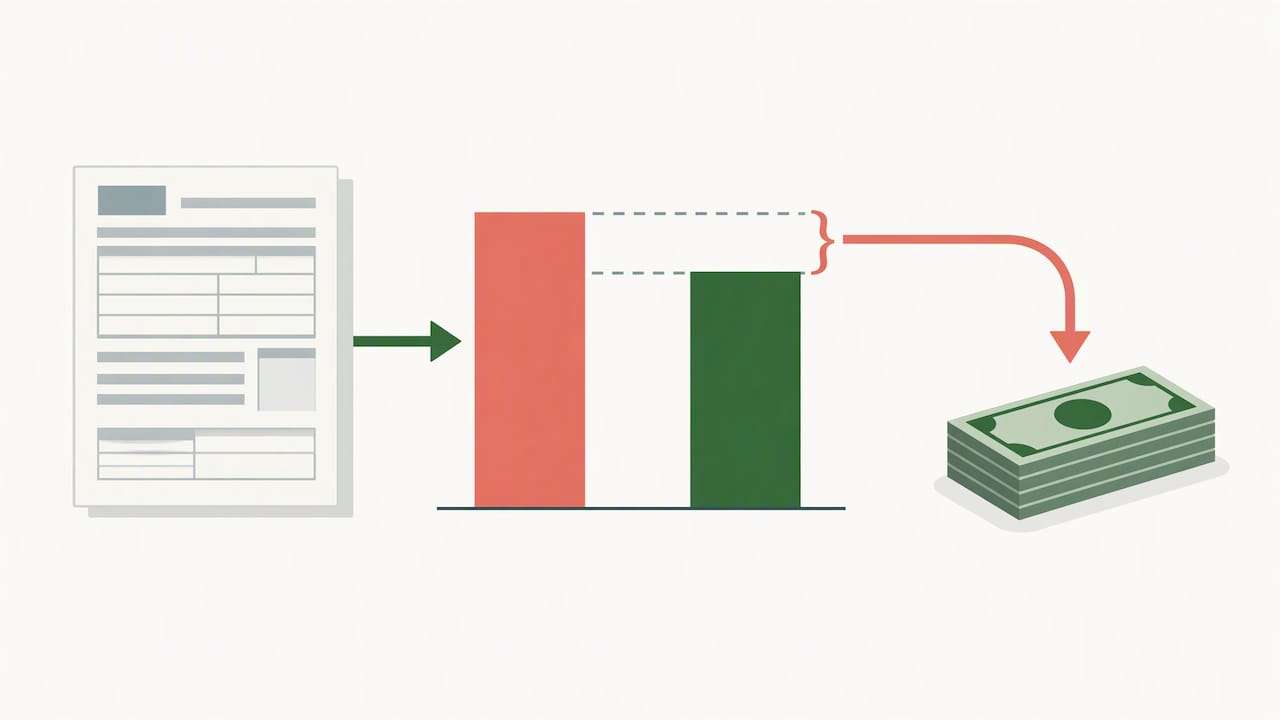
Reconciling sounds technical, but it is a comparison. Your Marketplace sends Form 1095-A, which lists your enrollment months, your premiums, and the advance payments paid on your behalf. You use those figures to complete Form 8962 and attach it to your federal return. The IRS instructions for Form 8962 explain that the form is used to figure your credit and reconcile it with your advance payments, and that it applies only to plans bought through a Marketplace.
Form 1095-A is the document people overlook. Before you file, check that it:
- Covers every Marketplace policy you held during the year
- Shows every month you were enrolled
- Lists the correct advance payment amounts
- Names the right people on each policy
If something is wrong, you generally need to contact the Marketplace to get a corrected form. Do that before you file, not after.
Reconciliation can end in one of two ways:
- Your final credit is larger than the advance payments. The difference can reduce your tax or increase your refund.
- Your advance payments are larger than your final credit. The excess is generally repaid, subject to the limits and tax-year rules that apply to your income.
Whichever way it falls, you cannot skip the step. If you received APTC, you must file a return and reconcile even if you would not otherwise have to file. The IRS notes that filing without reconciliation can delay a refund, and that it can make a household ineligible for APTC or cost-sharing reductions in a later year.
The IRS warns that filing without reconciliation can delay your refund, and a return may be required solely because you received advance payments.
Keep your Form 1095-A with your tax records, and file the two together. The IRS also publishes a page on what to expect when filing your tax return that covers what happens when APTC was received.
Which changes should you report during the year?
The best protection against a surprise bill is a current application. HealthCare.gov spells out the fix: log in, open your application, choose the life-change or application-update path, and report the change. The Marketplace then adjusts your future advance payments instead of leaving the correction to tax time.
Report these promptly:
- Income going up or down, including a new job, a raise, or lost hours
- Household size changes, such as a marriage, divorce, birth, or adoption
- A new address, especially if you move to another county or state
- New employer coverage offered to you or a family member
- Loss of other coverage, including Medicaid or CHIP
The direction of the change tells you what will happen. If your income rises or your household shrinks, your credit will probably decrease. If your income falls or your household grows, it will probably increase. HealthCare.gov also warns that failing to report changes can leave you owing money when you file your federal taxes.
The consequences of staying silent stack up: excess APTC, repayment at filing, and possibly trouble getting advance payments in a later year. Reporting only at annual renewal is a common mistake. A midyear update is what lets the Marketplace correct course while there is still time.
Pro Tip: Set a calendar reminder for the first of each quarter to compare your actual income so far with the estimate on your application.
After a major life event, work through this short list:
- Write down the date the change happened
- Update your Marketplace application within days, not months
- Check whether you now qualify for a special enrollment period
- Save the confirmation notice for your tax records
What do common scenarios look like at tax time?
Numbers make the mechanics clearer. These examples are illustrative, with simplified inputs and no real plan or income data, so treat them as patterns rather than predictions.
- Income rises midyear. Say a household estimated a modest income in January, took the full advance credit, and then landed a significant raise in June without updating the Marketplace. At filing, Form 8962 recalculates the credit using the higher actual income. The final credit is smaller than the advance payments, so some of the excess is repaid, subject to the limits for their income. Next steps: update the application the month the raise starts, and consider lowering the advance amount from then on.
- A freelancer with uneven income. A designer has one slow quarter and one very busy one. She builds her estimate from her best realistic year, then chooses to take only part of the credit in advance. At tax time, if her income lands below the estimate, she claims the remaining credit on Form 8962 and may see it as a larger refund. If it lands above, her smaller advance limits the repayment. Next steps: track income monthly, update after any large contract, and see our self-employed health insurance plans page for plan options.
- A family adds a dependent midyear. A couple has a baby in August and adds her to the plan. Household size goes up, so the credit will probably increase. The coverage effective date matters, so check with the Marketplace to confirm which months qualify for the credit. Next steps: report the birth to the Marketplace right away, use the special enrollment period, and confirm the new baby appears on Form 1095-A.
For each scenario, the pattern holds. Report the change quickly, choose an advance amount you can defend, and check Form 1095-A before you file.
How does the premium tax credit interact with Medicaid and CHIP?
The credit and public programs are designed to fit together, not overlap. If you qualify for Medicaid or CHIP, you generally cannot also receive the premium tax credit for the months you are eligible for those programs. The federal application screens you for both in one pass, so you see the right path without filing separate forms.
Where you land depends mostly on income and your state’s rules. Some households fall just above the Medicaid line and move into Marketplace coverage with the credit. Others fall just below and are directed to Medicaid or CHIP instead.
Two practical points help. First, if your income drops during the year, update your application. The Marketplace may find you newly eligible for Medicaid or CHIP, which changes your credit. Second, if you lose Medicaid or CHIP coverage, you may qualify for a special enrollment period to join a Marketplace plan with the credit. Report the change promptly so the handoff between programs does not leave you with a gap or an overpayment.
How does your filing status affect eligibility and the credit amount?
Filing status shapes the household that the Marketplace counts and the income it measures. In general, married couples need to file jointly to claim the credit, and the combined income of the couple is what drives the calculation. Filing separately usually cuts you off from the credit, apart from limited exceptions the IRS describes in its instructions.
Your status also decides who counts as a dependent. If another taxpayer claims you, you generally cannot take the credit yourself. And when a parent claims a child, the child’s coverage is tied to the parent’s household and income.
A few habits help here:
- Decide your filing status before you report your income to the Marketplace.
- Make sure household members listed on the application match who you will claim on your return.
- If you expect a change, such as a marriage or a divorce, update the Marketplace when it happens.
Mismatches between the application and the tax return are a common source of repayment surprises. When in doubt, ask a tax professional about your specific situation.
When can a life change open a special enrollment period?
Outside open enrollment, you can usually only join or change plans if a qualifying life event opens a special enrollment period. Several events tied to your credit eligibility count, including losing other coverage, moving, getting married, having or adopting a baby, and a change in your income that affects your eligibility.
These windows are short, and the clock often starts when the event happens. That is one more reason to report changes right away: reporting a life event and enrolling in a new plan often go hand in hand. Keep documents that prove the event, such as a loss-of-coverage letter or a lease, because the Marketplace may ask for them.
When a special enrollment period opens, use it to revisit your credit choices too. A new plan means a new premium, and a new household situation may mean a different expected income. Take a moment to compare plans, reset your advance amount, and confirm the coverage start date so the credit applies from the first month possible.
Can small business owners get a tax credit through SHOP?
Small employers have a separate path. The Small Business Health Options Program, or SHOP, is the Marketplace for businesses, and it is different from the individual Marketplace. Notably, SHOP plans do not qualify for the individual premium tax credit. The employee benefit works through a business credit instead.
The small business health care tax credit is available to qualifying small employers that offer coverage through SHOP. The rules turn on factors such as how many full-time equivalent employees you have, the average wages you pay, and how much of the premium you cover. Because those thresholds change, confirm the current details with the IRS or a tax professional before you count on the credit.
We help small businesses compare group options across several carriers. If you run a small company, our Small Business Health Plans page explains how we set up group coverage and what to expect.
Why we think the credit is worth planning, not guessing
Our view is that the biggest mistake is treating the monthly discount as free money. It is an advance on a number that does not get finalized until you file. The households that do well are not the ones who squeeze the largest possible advance. They are the ones who pick an advance they can live with and keep their application current.
We would rather you take a slightly smaller discount and get a refund than take every dollar and write a check in April. We help clients set up their accounts and compare plans across carriers. We are an independent agency, so the comparison is not tied to one insurer. Reach out and we will walk through your situation at your pace, with no pressure.
— Pounds Health Insurance
How Pounds Health Insurance can help you apply correctly and pick the right APTC strategy
If the steps above feel like a lot, you do not have to do them alone. We are an independent agency serving Bradenton, Sarasota, and St. Petersburg, and we are licensed to write health insurance in many states across the country. We work with individuals, families, and small businesses, and we compare plans from carriers including Blue Cross Blue Shield, Cigna, United Healthcare, and Aetna.
[CTA IMAGE]

Here is what we can do for you:
- Compare personalized plan options side by side across several carriers
- Guide you through your Marketplace account and application
- Compare plan options with you
Whether you need individual coverage, family coverage, or a group plan for your team, we start with plain answers and a clear plan. Contact Pounds Health Insurance today for a consultation, and we will help you enroll with confidence.
This article is general information, not a substitute for advice from a qualified financial advisor. Consult a qualified financial professional about your own circumstances before acting on anything here.
FAQ
How do I calculate the advance premium tax credit (APTC)?
The Marketplace estimates your credit from your expected household income and family size, then you choose how much to receive in advance. You can take all, some, or none of it each month. Your final credit is figured later on Form 8962.
How does the ACA determine income?
The Marketplace uses modified adjusted gross income, generally your adjusted gross income plus untaxed foreign income, non-taxable Social Security benefits, and tax-exempt interest. It looks at your expected income for the coverage year, not last year’s income. HealthCare.gov explains what counts.
Do I have to pay back my premium tax credit?
You may, if the advance payments you received are larger than the credit you qualify for once your actual income is known. If your income came in lower, you may get a larger credit instead. HealthCare.gov notes both outcomes.
Do I have to file a tax return if I received advance payments?
Yes. If you received APTC, you must file a return and attach Form 8962, even if you would not otherwise need to file. Skipping the step can delay your refund and affect future advance payments.
Sources
- Reconciling your advance payments of the Premium Tax Credit | Internal Revenue Service
- Healthcare
- What We Know So Far About 2026 ACA Marketplace Enrollment, Premiums, and Deductibles | KFF











