
Every year, there’s a specific window of time when you can sign up for a new Affordable Care Act (ACA) health plan or change the one you already have. For 2026 coverage, that all-important window opens on November 1, 2025, and closes on January 15, 2026.
Getting these dates on your calendar is a big deal. If you miss this enrollment period, you could be left without health insurance for all of 2026 unless you have a specific life event that qualifies you to enroll later.
Your Guide to 2026 ACA Open Enrollment Dates

I like to tell my clients to think of the annual Open Enrollment Period as the one time of year the doors to the health insurance marketplace are thrown wide open for everyone. It’s your chance to get a new plan or switch things up, no questions asked.
This timeframe isn't random—it's carefully designed to make sure the insurance market stays balanced and predictable. More importantly, the specific day you enroll determines when your new coverage actually kicks in.
The Two Critical Deadlines
Within that main enrollment window, there are two key dates you absolutely need to know. They control whether your plan starts right on New Year's Day or a month later.
- December 15, 2025: This is your goalpost if you want your health coverage to begin on January 1, 2026. Hitting this deadline means you’ll have seamless coverage from the very start of the year.
- January 15, 2026: This is the absolute last day to sign up for a 2026 plan. If you enroll anytime between December 16 and this final day, your coverage won't start until February 1, 2026.
For most people, the Open Enrollment Period is the only opportunity to secure health coverage for the year. Planning around the December 15 deadline is the best way to guarantee your benefits are active from day one of 2026.
These dates are the federal standard, so they apply to states like Florida, Texas, and Georgia that use the main HealthCare.gov platform. The good news is that these dates have been pretty consistent year after year, making it easier to plan.
However, it's worth noting that some states run their own marketplaces and may offer a longer enrollment period. California, for example, often extends its deadline. You can learn more about how different states handle their timelines on HealthInsurance.org.
If you’re just getting started and want a better handle on the basics, our guide answering the question "what is open enrollment for health insurance?" is a great place to begin. A little background knowledge can make the whole process feel much less intimidating.
Why Missing The Enrollment Window Is A Big Deal

Here’s something I see trip people up all the time: you can’t just sign up for health insurance whenever the mood strikes. The ACA marketplace operates on a strict schedule, and if you miss that window, you’re usually out of luck for the rest of the year.
There's a good reason for this. By having everyone enroll during a set period, the system prevents people from waiting until they get sick to buy a plan. This ensures a healthier, more balanced mix of people in the insurance pool, which is what helps keep premiums from skyrocketing for everyone.
What Happens If You Miss The Deadline?
Letting that final January 15 deadline pass without enrolling means you could find yourself completely uninsured for all of 2026. This isn't just an inconvenience—it’s a massive financial gamble.
Think about it. A sudden illness, a car accident, or even a seemingly minor surgery can quickly rack up tens of thousands of dollars in medical bills. Without a plan, you're on the hook for the full, undiscounted cost of every doctor's visit, prescription refill, and emergency room trip. A manageable health issue can become a devastating financial crisis in the blink of an eye.
The ACA Marketplace is more vital than ever, with enrollment hitting a record 24.3 million people in 2025. That’s a staggering 113% jump since 2020, which shows just how many Americans depend on this specific window to get covered. You can dig into the numbers yourself and see what’s driving this growth on KFF.org.
A Real-Life Example I See Every Year
I work with a self-employed graphic designer whose family relies entirely on the ACA marketplace for their health insurance. For them, open enrollment isn't just another date on the calendar; it's the most important financial planning event of the year.
She knows that dropping the ball isn't an option. Her daughter has asthma, and those regular check-ups and inhalers would be incredibly expensive out-of-pocket. Her husband is in a trade where an on-the-job injury is a constant risk.
So, every fall, she gets proactive. She uses this time to:
- Review Plan Changes: She carefully looks at how her current plan’s costs, drug coverage, and doctor network are changing for the upcoming year.
- Compare New Options: She shops the market to see if a different carrier has a plan that offers a better value or a network that better suits her family's needs.
- Secure Subsidies: She updates her income projections to make sure she gets every penny of the tax credit she's entitled to, which directly lowers her monthly premium.
Her diligence is a perfect example of why the ACA open enrollment dates are so important. It's not just about checking a box—it's about actively protecting your family’s health and financial stability.
How State Deadlines Can Differ From The Federal Rules
It’s easy to hear about the federal ACA Open Enrollment dates and assume that one timeline fits all, but that's a common and potentially costly mistake. While the federal government sets a clear schedule for the 30+ states using the HealthCare.gov platform, many states run their own show.
When a state operates its own health insurance marketplace, it also gets to set its own rules, including the deadlines for enrollment. This creates a real patchwork of timelines across the country. Someone living in Florida or Texas, for instance, will follow the federal schedule that closes on January 15. But if you live in a state with its own exchange, like California or New York, you’ll likely have more time.
Why Do These Differences Exist?
So, why isn't there just one national deadline? The short answer is state control. States that have invested in building their own marketplaces have the freedom to adjust the enrollment process to better serve their local populations.
Think of it as a way to fine-tune the system. A longer enrollment period gives people more breathing room to compare plans, gather their documents, and make a smart choice without feeling rushed. It also gives state agencies a wider window for outreach, helping them connect with hard-to-reach communities and make sure everyone knows they have a chance to get covered.
For example, a state might find that giving residents an extra two weeks is crucial for reaching rural families or those who don't speak English as their first language. That flexibility is one of the biggest advantages of a state-run marketplace.
This is why you absolutely cannot make assumptions based on national news. A family in Sarasota, Florida, has a completely different final day to enroll than a family in Denver, Colorado. Your first step should always be to verify the specific ACA Open Enrollment dates for your state. For a closer look at the requirements that determine who can sign up, you can read our guide on Affordable Care Act eligibility requirements.
Examples Of States With Unique Timelines
While you should always double-check the current year's dates, some states have a consistent history of offering more time than the federal exchange. Here are a few common examples of states that often have deadlines later than January 15:
- California: The Covered California marketplace typically gives residents until January 31 to enroll.
- New York: NY State of Health has also historically extended its enrollment window through the end of January.
- Colorado: Connect for Health Colorado often sets its own schedule based on local needs and legislative decisions.
- New Jersey: Get Covered NJ is another state-run exchange that frequently provides a later deadline.
Trying to keep all these state-by-state differences straight can feel overwhelming. Since we're an agency that serves clients in 30 different states, we make it our job to track every single one of these deadlines so you don’t have to.
What If You Miss The ACA Open Enrollment Dates?
So, the deadline for ACA Open Enrollment came and went, and you didn't get a chance to sign up. It’s a sinking feeling, but don’t panic just yet. The health insurance system has a built-in safety net for when life throws you a curveball outside that standard enrollment window.
This safety net is called a Special Enrollment Period, or SEP for short. Think of it as a second chance to get coverage, but it’s not for everyone. You can only access it if you’ve gone through a specific, government-approved life change.
Qualifying For A Special Enrollment Period
These specific triggers are officially known as Qualifying Life Events (QLEs). They’re basically major life moments that understandably affect your health insurance needs. The whole point is to make sure people aren't left uninsured for months on end just because something big and unexpected happened in their lives.
When a QLE happens, it opens up a 60-day window for you to enroll in a new health plan. The clock starts ticking the very day of the event, so you have to move fairly quickly. If you let those 60 days pass, the window closes, and you'll most likely have to wait until the next Open Enrollment season rolls around.
Some of the most common situations that count as a Qualifying Life Event include:
- Losing Other Health Coverage: This is a big one. It covers everything from being laid off from a job with benefits to your COBRA coverage running out. It also applies to young adults who age out of their parent’s plan when they turn 26.
- Changes in Your Household: Getting married is a classic example. So is having a baby, adopting a child, or finalizing a divorce or legal separation (if it causes you to lose your previous insurance).
- A Permanent Move: Relocating to a new ZIP code or county can also open the door for an SEP. This is especially true if you move to an area where your old plan isn't available or where new ACA plans become an option for you.
A Special Enrollment Period is your opportunity to secure coverage after a major life change. Understanding whether your situation qualifies is the first step toward getting the insurance you need, no matter the time of year.
How To Use Your Special Enrollment Period
If you think you've experienced a QLE, the process is pretty straightforward. You'll apply through the HealthCare.gov marketplace (or your state's own exchange) and report your life event. You will need to provide some basic documentation to prove it—for instance, a letter from a past employer if you lost your job or a utility bill with your new address if you moved.
Once your SEP eligibility is confirmed, the fun part begins. You can shop, compare, and pick a plan just like you would during the regular ACA open enrollment dates. The date your new coverage actually kicks in will depend on when you complete your enrollment.
The rules can feel a little complicated, but we've put together a full guide on what a Special Enrollment Period is and how it works. Getting a handle on these details ensures you don't miss out on an important chance to protect your health and finances.
Your Step-By-Step Guide To A Smooth Enrollment
I get it—shopping for health insurance every year can feel like a huge chore. But if you break the process down into a simple, month-by-month timeline, it becomes much less intimidating. Having a game plan helps you move confidently and make sure you’ve got the best coverage before the critical ACA open enrollment dates are behind you.
Even if you miss the main window, life sometimes gives you a second chance. The timeline below shows how a major life change can open up a special opportunity to get insured.
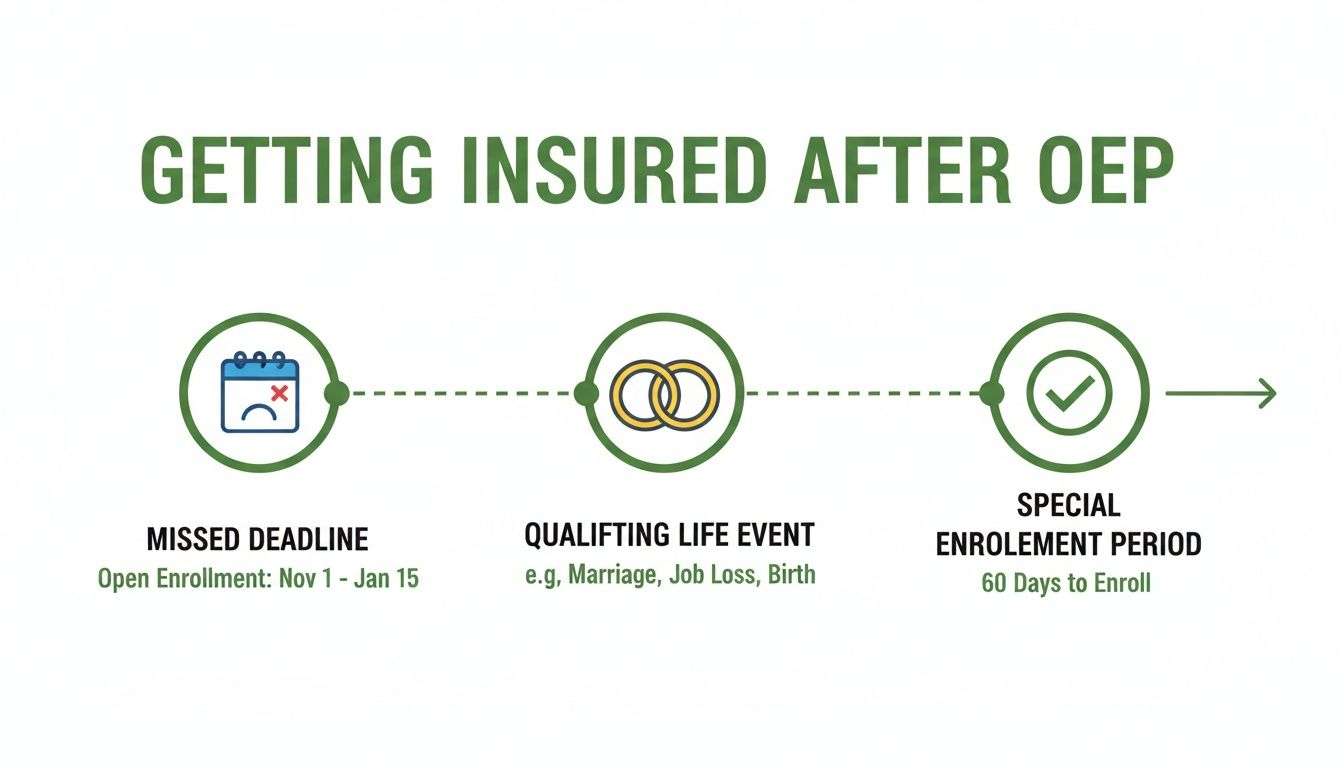
It’s a great reminder that while the annual deadline is firm, certain events create a new enrollment window just for you.
October: Your Preparation Month
Think of October as your prep month. Before enrollment officially kicks off, you can get all your ducks in a row. Doing this work now saves you from a frantic scramble later and makes the whole application process a breeze.
Start by gathering the necessary documents for everyone in your household who needs coverage. This isn't just about saving time; having accurate information is key to getting the right amount of financial help you may be eligible for.
Here’s what you should have handy:
- Household Information: Social Security numbers and birthdates for every person applying.
- Income Documentation: Pay stubs, W-2 forms, or your most recent tax return. You'll need these to estimate your household income for 2026.
- Current Plan Details: If you’re currently insured, grab your policy number and the name of your plan.
- Medical Needs: Make a simple list of your family’s doctors and specialists, plus any prescription drugs you take regularly.
November: Your Shopping Window
When November 1 rolls around, Open Enrollment is officially live. This is go-time. November is the perfect month to actively compare your options and see what's out there. Never assume your current plan is still the best fit, as plans and their costs change every single year.
Use that list of doctors and prescriptions you made in October to check which new plans will cover them. One of the biggest mistakes people make is not verifying their doctor is still "in-network," a small step that can save you from huge surprise bills down the road.
A Word of Warning: Don't just let your plan auto-renew! Insurers change their networks, drug formularies, and pricing every year. What was a great deal last year might have higher costs or a completely different doctor network this year. The only way to know for sure is to actively shop.
December: Your Decision Deadline
Once December hits, it’s time to make your final decision. The most important date on your calendar this month is December 15. If you enroll in a plan by this day, your new coverage is guaranteed to start on January 1, 2026, with no gap.
If you wait until after that date, your coverage won't kick in until February 1st, leaving you uninsured for a full month. For a deeper dive into the specifics, you can learn more about how to enroll in health insurance and what to expect.
By following this simple timeline, you can turn a task you dread into a straightforward, manageable process. A little prep in October, some smart shopping in November, and a final decision by mid-December will set you up for a worry-free start to the new year.
How An Expert Can Simplify Your Health Insurance Journey
You don’t have to go it alone when navigating the health insurance marketplace. Trying to make sense of the ACA open enrollment dates, ever-changing plan details, and complicated subsidy rules can feel like solving a puzzle with half the pieces missing. That's where working with an independent broker can completely change the game.
Think of an agent from Pounds Health Insurance as your personal guide. We’re here to translate the industry jargon, run the numbers on your potential savings, and—most importantly—find a plan that actually fits your life and your budget. Our loyalty is to you, not to a single insurance company.
A Truly Personalized Approach
We shop plans from all the major carriers—like Aetna, Blue Cross Blue Shield, and Cigna—to find your perfect match. This lets us cross-reference your preferred doctors and specialists to make sure they’re in-network, a critical step that helps you avoid those dreaded surprise bills down the road.
This kind of hands-on guidance is especially important in high-growth states. Texas, for instance, has seen its ACA market explode, with enrollment expected to surge past 4.1 million people during the 2026 open enrollment period. That massive growth highlights the diverse needs of families and individuals, a trend we see across all the Southern states we serve. If you're curious, you can explore the research from the Baker Institute to understand more about this trend.
Gaining Confidence In Your Coverage
Whether you live in Bradenton, Sarasota, or you're a self-employed professional charting your own course, having an expert on your side brings incredible peace of mind. We take a no-pressure, client-first approach that’s all about helping you make a decision you feel good about.
An expert can also help you understand all your options, including how to approach navigating healthcare without insurance, making sure you can get the care you need no matter the situation.
We believe the best choice is always an educated one. Our goal is to empower you with clear, straightforward advice so you can feel secure in the health coverage you select for the year ahead.
This process is about more than just finding the lowest monthly premium; it's about striking the right balance between costs and the benefits that truly matter to you. For a deeper look into what it's like to work with a pro, check out our guide on how to find a health insurance agent.
Ultimately, our job is to lift this burden from your shoulders. We do the heavy lifting—the research, the comparisons, and the verifications—so you can focus on what matters most: choosing a plan that protects your family's health and finances. Let us make your 2026 enrollment journey a simple and successful one.
Common Questions About ACA Enrollment Dates Answered
Once the enrollment window starts to close, the questions really start pouring in. It's totally normal to feel a bit of pressure, and understanding the rules can save you from major headaches down the road. Let's walk through some of the most common questions we hear about the ACA open enrollment dates.
The big one is always, "What happens if I miss the deadline?" Once that January 15 window slams shut, you generally can’t buy an ACA-compliant plan for the rest of the year. Your only way back in is if you have a Qualifying Life Event, which triggers a Special Enrollment Period.
Can You Switch Your Plan After Enrolling?
This question comes up a lot. You’ve picked your plan, submitted the application, and then you see another option you like better. Can you switch? Unfortunately, the answer is almost always no.
Once you’ve enrolled, that plan is yours for the calendar year. Think of it like signing a lease—you're locked in until the renewal period comes around again, unless a major life event (like a Qualifying Life Event) gives you an opportunity to make a change. This is precisely why taking your time during Open Enrollment is so critical.
Actively shopping for a plan each year is one of the smartest things you can do. Auto-renewing might seem easy, but you could miss out on a better plan or significant savings as networks and subsidies change annually.
That brings us to another common pitfall: auto-renewal. Do you have to sign up again every single year? While your plan will likely auto-renew to make things "easier," letting it happen without a careful review is a huge mistake. Insurers change their plans, doctor networks, and drug formularies every year. For a deeper dive into the enrollment process and why this annual review is so important, check out this excellent guide on What Is Open Enrollment in Health Insurance.
Simply put, actively shopping each year ensures you get the best value and aren't caught off guard by unexpected changes.
You don't have to figure all this out on your own. At Pounds Health Insurance, our job is to give you clear, straightforward answers and help you make a confident choice for your 2026 health coverage. Contact us today for a free consultation and let us help you find the right fit.