You sit down to compare health plans, thinking you'll get one clear answer to a simple question: what does health insurance cost in the USA?
Instead, you get a monthly premium, a deductible, a copay, a network, a metal level, and a subsidy estimate that may or may not apply to you. One plan looks cheap until you notice the deductible. Another looks expensive until you realize the tax credit changes everything. The prevalent confusion doesn't stem from an inability to understand. It arises because the system asks regular people to price something that behaves more like a moving puzzle than a normal household bill.
That confusion gets worse when you're also trying to budget for real care. Maybe you're checking routine lab work and comparing something like FindMyScript A1C cost information, or trying to estimate what one specialist visit could mean under different plans. The details matter, and the pricing language often doesn't help.
Why Health Insurance Costs Are So Confusing
A lot of people start in the same place. You're self-employed, between jobs, aging off a parent's plan, or just trying to stop auto-renewing something that no longer fits. You open a quote page, see one monthly number, then notice a much larger deductible underneath it. Now you're wondering which number matters.
That frustration is grounded in a long-term trend, not a personal failure to understand insurance. A recent economic evaluation found that from 1999 to 2024, mean worker contributions toward family premiums increased 308%, total premiums increased 342%, and premiums grew at about three times the rate of workers' earnings over the same period, according to this economic review of premium growth and health care prices.
The System Uses Several Prices At Once
Insurance doesn't present one price. It presents layers of prices.
- Monthly premium: What you pay to keep the plan active each month.
- Deductible: What you may pay before the plan starts sharing more of the cost for many services.
- Copay and coinsurance: What you pay when you use care.
- Out-of-pocket maximum: The most you pay for covered care in a plan year, not counting your premium.
Each number answers a different question. That's why comparing plans can feel like comparing rent, car repairs, and a gym membership all at once.
Health insurance is one of the few things people buy where the sticker price and the real-life cost can be very different.
If you've ever thought, "Why can't they just tell me what it will cost me?" you're asking the right question. A clearer explanation of that complexity is in this guide on why health insurance feels so confusing.
The Hard Part Isn't Just Price
It's uncertainty.
You don't know whether this will be a light-care year or a heavy-care year. You don't know whether your doctor is in-network until you check. You don't know whether you qualify for help until your income is run through subsidy rules. That's why smart shopping isn't about finding the cheapest number on page one. It's about understanding which number deserves your attention first.
Decoding Your Health Insurance Premium
Your premium is the monthly amount you pay to keep coverage in force. It serves as the base payment to gain access to the plan. It doesn't tell you everything, but it does tell you what the plan costs before you start using care.
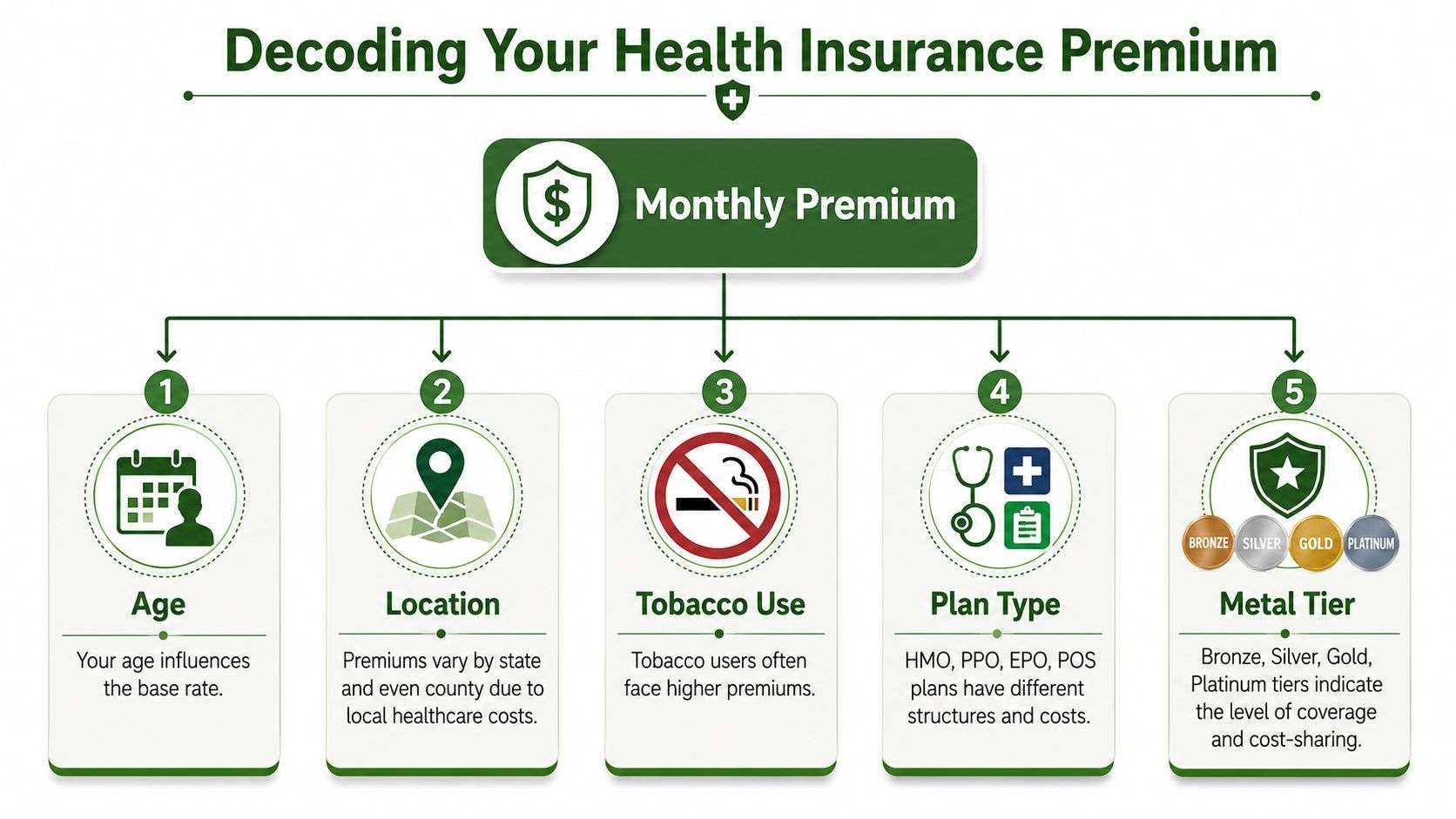
A good way to think about premiums is like building a car. The final price changes based on the model, features, and where you're buying it. Insurance works the same way. Your age, location, tobacco use, plan type, and metal tier all shape the starting quote.
The Main Factors Behind The Monthly Price
Some premium factors are personal, and some are local.
- Age: Older applicants usually see higher base rates than younger ones.
- Location: Rates can change by state and even county because provider costs and insurer competition vary locally.
- Tobacco use: Tobacco users often pay more.
- Plan type: HMO, PPO, EPO, and POS designs can differ in flexibility and cost.
- Metal tier: Bronze, Silver, Gold, and Platinum reflect how costs are split between you and the insurer.
If you want a simple plain-English definition before comparing plans, this article on what a health insurance premium means is a helpful starting point.
What Metal Levels Usually Mean
Metal tiers are where many shoppers get tripped up. They sound like quality rankings, but they aren't. Bronze isn't "bad" and Platinum isn't "smart" by default. They're just different cost-sharing setups.
For the 2025 ACA Marketplace, average monthly premiums were about $380 for Bronze, $495 for Silver, $510 for Gold, and more than $540 for Platinum, with deductible ranges roughly from $7,400 for Bronze to about $500 to $1,000 for Platinum, based on these 2025 marketplace premium and deductible averages.
Here's the easy way to read that:
- Bronze: Lower monthly premium, but you usually take on more cost when you use care.
- Silver: Middle-of-the-road premium and often the most important tier to examine if you may qualify for extra savings.
- Gold: Higher monthly premium, but lower out-of-pocket cost when you need services.
- Platinum: Highest premium, but generally the least cost-sharing at the point of care.
Practical rule: Don't ask only, "Can I afford this premium?" Also ask, "Can I afford to actually use this plan?"
A Simple Example
If you're healthy, rarely see doctors, and mainly want protection against a major surprise, a Bronze option may feel comfortable because the monthly bill is lighter. If you expect regular prescriptions, specialist care, or ongoing treatment, paying more each month for Gold or a richer Silver plan may feel steadier.
The premium is your starting number. It isn't your whole cost story.
Where You Shop Matters
Two people can look for coverage in the same city and get very different results because they shopped in different places. That's why "health insurance prices USA" isn't just about the plan itself. It's also about where you buy it.
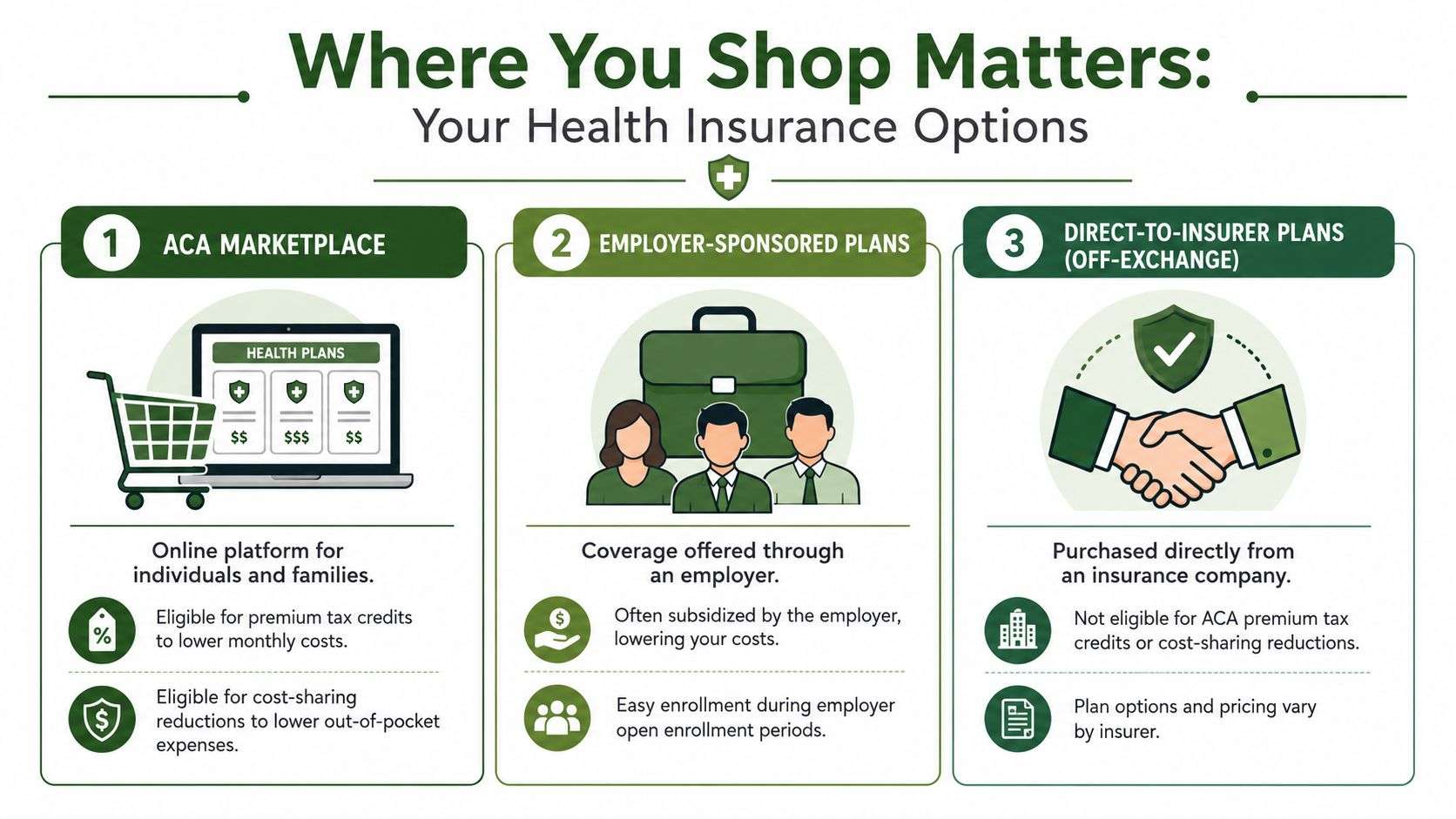
Individuals without job-based coverage are comparing three pathways: the ACA Marketplace, a private off-marketplace plan, or coverage through an employer.
ACA Marketplace
The Marketplace is the public shopping platform for individual and family plans. This is the place many freelancers, early retirees, and people leaving employer coverage start. It's also where premium tax credits and cost-sharing reductions may be available if you qualify.
The biggest strengths are predictability and financial help. Plans sold there follow ACA rules, and you're not guessing whether subsidy support will apply. This overview of the individual health insurance marketplace gives a good snapshot of how that shopping channel works.
Marketplace plans are often the best first stop when your income may qualify you for assistance. If that's you, the listed premium may not be the amount you pay.
Private Off Marketplace Plans
Private plans sold directly outside the Marketplace can make sense in some cases. People sometimes look there for different networks, different carrier choices, or plan designs that aren't available in the public exchange.
The tradeoff is simple. You won't get ACA premium subsidies through an off-marketplace purchase. So if you're subsidy-eligible, a private plan that first appears attractive can become the more expensive option once you compare net cost.
Employer Coverage
Employer plans work differently because you're entering a group arrangement instead of shopping entirely on your own. For many people, this is the easiest route because the employer handles plan selection and contributes toward the overall cost.
Still, "easier" doesn't always mean "better for every household." If you're adding family members, comparing spouse options, or leaving a job midyear, it's worth slowing down and checking whether a Marketplace path or private individual plan fits your needs better.
Which Store Fits Your Situation
A simple way to sort your options:
- Use the ACA Marketplace if you buy your own coverage and want to see whether subsidies lower your real monthly cost.
- Check private plans if provider access or carrier preference matters more than subsidy eligibility.
- Look closely at employer coverage if you have access to it and want the convenience of group enrollment.
The best shopping channel isn't the one with the lowest headline premium. It's the one that gives you the best overall value for your doctors, prescriptions, and likely care use.
The Subsidy Secret How Tax Credits Slash Your Costs
This is the part many shoppers miss. They see the full premium first, assume that's the final bill, and leave. In reality, the Marketplace sticker price is often not the amount eligible people end up paying.
That's why health insurance prices in the USA can look unaffordable at first glance and much more manageable after a proper subsidy check.
What Premium Tax Credits Do
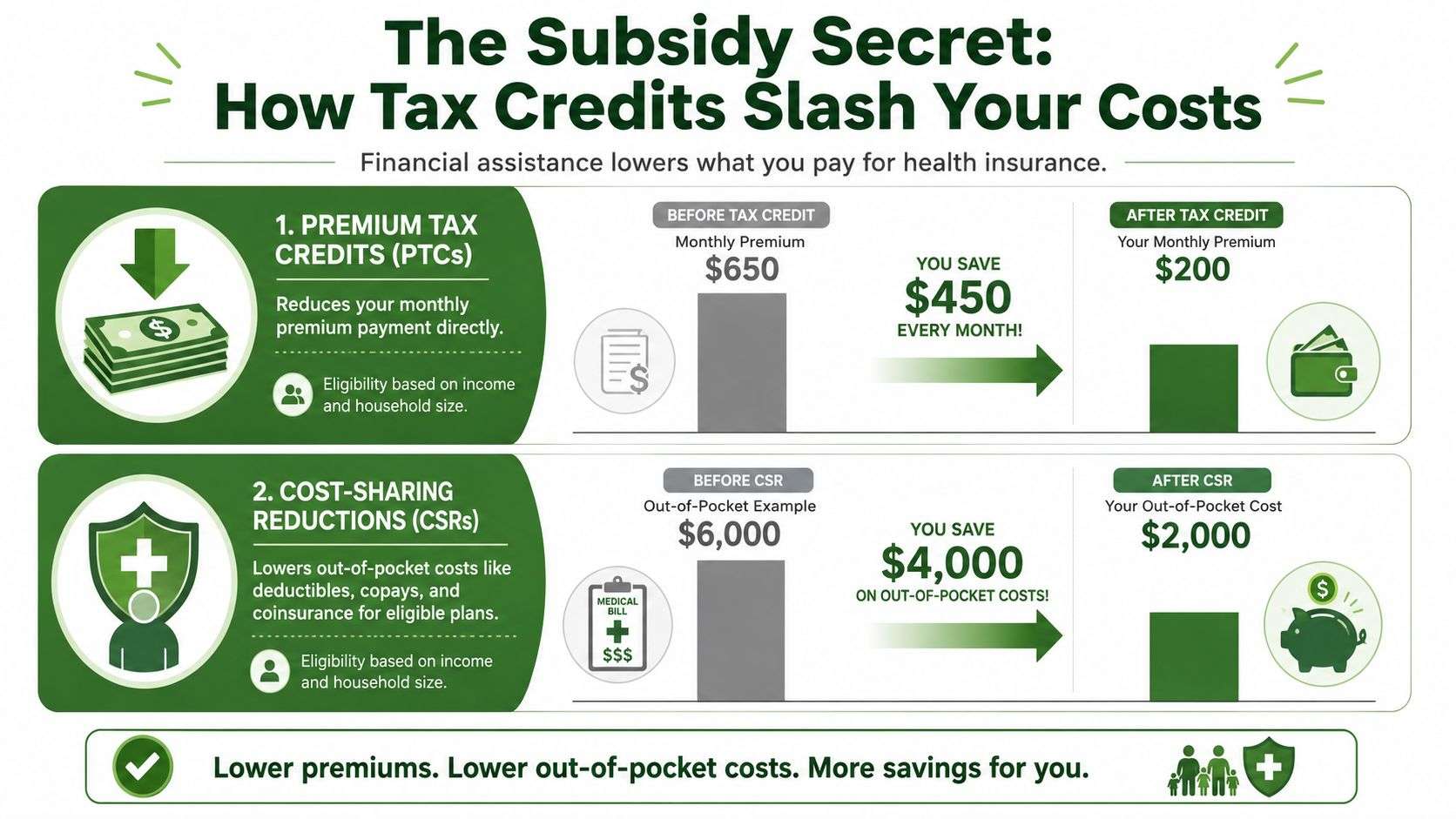
Premium tax credits reduce what you pay each month for Marketplace coverage if you qualify based on income and household details. The important thing is that they lower your net premium, not the listed plan price itself.
For 2025, about 4 out of 5 ACA enrollees found a plan for $10 or less per month after subsidies, and enhanced subsidies increased the average premium tax credit by $59 per month, according to this HHS review of subsidy savings and Marketplace affordability.
That one fact changes how you should shop. The first premium you see is often just the sticker. Your real premium may be dramatically lower.
If you'd like a clearer breakdown of how that discount works, this explainer on the health insurance premium tax credit makes the mechanics easier to follow.
What Cost Sharing Reductions Do
A second form of help is cost-sharing reductions, often shortened to CSRs. These don't mainly lower the monthly premium. They reduce what you pay when you use care by improving deductibles, copays, and similar out-of-pocket costs for eligible shoppers in qualifying plans.
This matters because a low monthly payment doesn't always mean a plan is easy to use. CSRs can make the care itself more affordable, not just the premium.
Why People Misjudge Their Options
People often make one of three mistakes:
- They stop at the sticker price: They never check subsidy eligibility.
- They focus only on premium: They ignore how much care will cost later.
- They assume last year's result still applies: Income, household size, and local options can all change.
A Marketplace plan that looks expensive before subsidies can become one of the most budget-friendly options after a real eligibility review.
The smart move is to treat every quote in two versions: before help and after help.
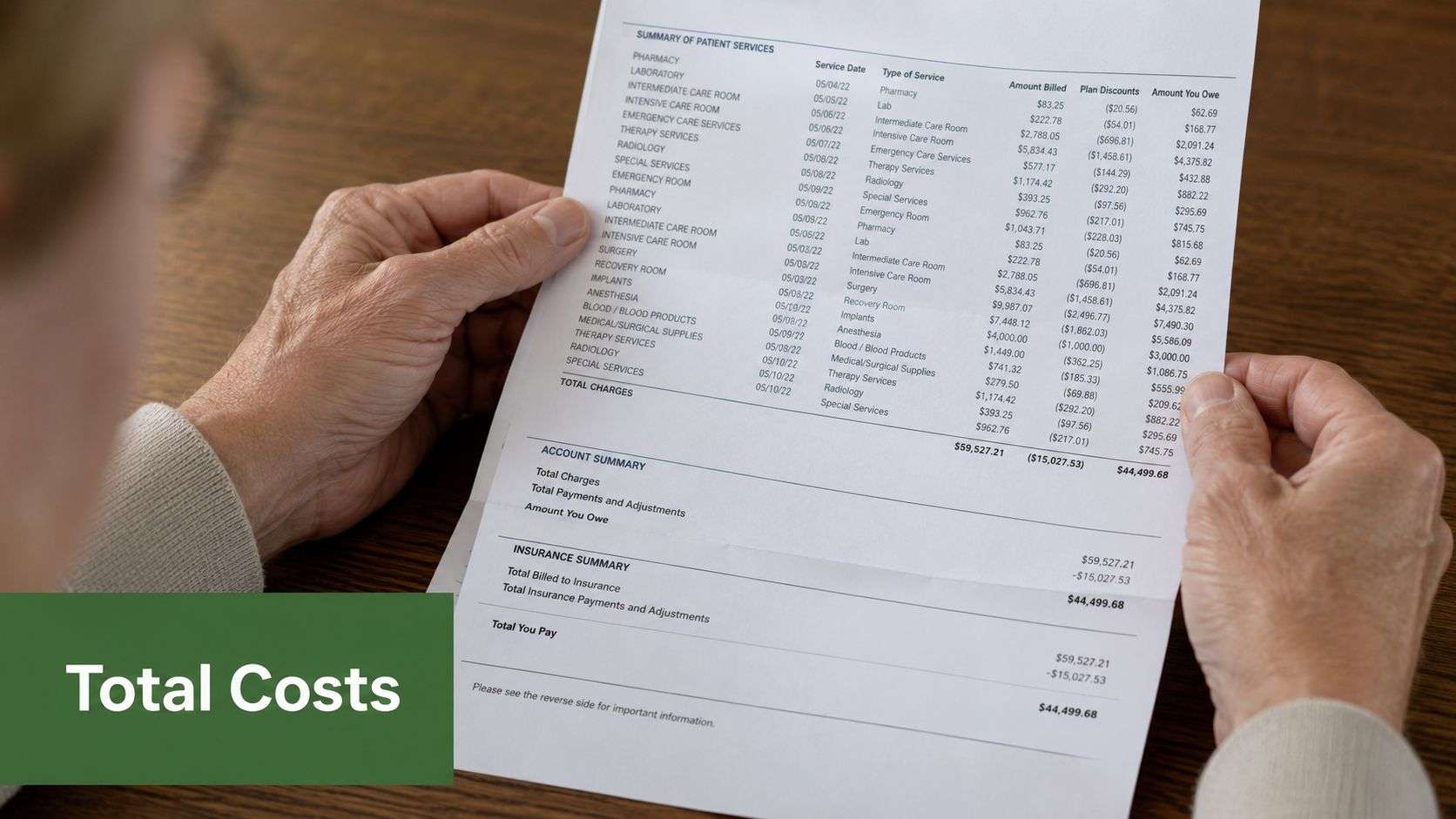
Looking Beyond The Premium To Understand Total Costs
The monthly premium gets most of the attention because it's the easiest number to see. But the premium is only the surface. The deeper part of the cost sits underneath, like the larger part of an iceberg under the waterline.
That's where deductibles, copays, coinsurance, and the out-of-pocket maximum live.
The Terms That Matter When You Actually Use Care
A quick plain-language version helps:
- Deductible: What you may pay before the plan starts paying more for many covered services.
- Copay: A set amount for certain visits or prescriptions.
- Coinsurance: Your percentage share of a covered bill after the deductible in many cases.
- Out-of-pocket maximum: Your ceiling on covered in-network cost-sharing for the year. This guide to maximum out-of-pocket limits can make that number easier to interpret.
A low premium can still leave you exposed if the deductible is far beyond what you could handle on short notice.
Why Cheap Can Be Risky
In 2024, 38% of insured adults under 65 worried about affording premiums, 42% said health care costs are difficult to afford, and more than 40% of U.S. households lacked enough assets to pay a typical private-plan deductible, according to this health care affordability analysis from Peterson-KFF Health System Tracker.
That explains why "cheap" is often misleading in health insurance. A plan can be cheap to own but expensive to use.
For example, someone choosing fertility testing or other out-of-pocket services may need to compare not only network benefits but also direct-pay options. Resources like affordable semen analysis without insurance can help people understand when paying directly may be worth comparing against plan cost-sharing.
A Better Way To Compare Plans
Instead of asking only which premium is lowest, ask:
- How often do I expect care?
- Do I take regular prescriptions?
- Would I struggle to meet this deductible if something happened in February?
- Are my doctors and hospitals in-network?
If you use very little care, a higher deductible may be a tradeoff you're comfortable making. If you know you'll use the plan, richer coverage can be the safer financial choice even when the premium is higher.
Practical Strategies To Lower Your Health Insurance Costs
Prices move. Carriers reprice plans, provider networks change, and your subsidy situation may shift with income. That's why passive shopping usually costs more than active shopping.
The U.S. individual coverage market saw direct written premium increase 26.6% year over year in 2024, while median ACA exchange premiums rose about 7%, according to the NAIC 2024 health industry commentary. If you let a plan roll over without checking it, you might be accepting a very different value than you had last year.
Start With Your Likely Use Pattern
Don't choose a plan as if every year is random. Start with the care you reasonably expect.
- Rare medical use: A lower-premium option may fit if you mainly want protection against larger surprises.
- Regular prescriptions or specialist care: A richer plan may reduce stress and out-of-pocket spikes.
- Known upcoming care: Look beyond premium first. Your deductible and network may matter more.
Check The Levers You Can Control
You can't control the market, but you can control how carefully you compare.
- Verify subsidy eligibility: A plan that looks too expensive may become workable after tax credits.
- Check network type: HMO, PPO, and EPO differences affect both flexibility and cost.
- Review provider access: Make sure your doctors, hospital system, and medications fit the plan.
- Consider HSA compatibility: If a plan is HSA-eligible and you can fund the account, that can help you manage future out-of-pocket costs.
Renewing automatically is convenient. Re-shopping annually is usually smarter.
Re Shop Every Open Enrollment
Even if you liked your current plan, revisit it. Plans can change in ways that aren't obvious from the premium alone. A carrier may shift a deductible, narrow a network, or move a drug to a different cost tier.
This matters even more if you're paying cash for medications or comparing options outside insurance. For example, people exploring weight-loss treatment often need to compare plan benefits against direct-pay alternatives such as Blue Haven RX's Wegovy solutions. That kind of comparison can reveal whether a more expensive plan is the cheaper total-cost choice.
How To Get Accurate Quotes And Expert Guidance
Online quote tools are useful for a first pass. They help you see plan names, metal levels, and rough pricing. But they usually aren't enough to answer the questions that drive the ultimate decision.
An accurate quote depends on details like your county, age, tobacco status, household size, income estimate, preferred doctors, prescriptions, and whether your providers are in-network for a specific plan variation. That's a lot to juggle on your own, especially when two plans can look similar on screen and behave very differently once you use them.
What To Have Ready Before You Ask For Quotes
Bring a short list, not a pile of paperwork.
- Your doctors and clinics: Include names and locations.
- Your prescriptions: Exact drug names matter.
- Your budget range: Monthly comfort level and deductible comfort level are not the same thing.
- Your expected care: Think routine visits, ongoing treatment, or upcoming procedures.
- Your income estimate: If you're considering Marketplace coverage, that piece can change the net cost substantially.
Why Human Help Still Matters
A good independent broker doesn't just recite premiums. They help translate tradeoffs. They can compare carrier options, flag network issues, explain whether a lower premium is worth the deductible risk, and help you see the difference between sticker price and real cost.
That kind of help is especially useful if you're self-employed, leaving a job, covering a family, or trying to decide between ACA and private plans. In those moments, the best choice usually comes from context, not from a search result.
If you want help sorting through your real options, Pounds Health Insurance can provide no-pressure guidance, fast quotes, and side-by-side plan comparisons across major carriers and ACA choices. They help individuals, families, self-employed professionals, and small businesses understand premiums, deductibles, networks, and subsidy eligibility so you can choose coverage based on total value, not just the first number you see.